

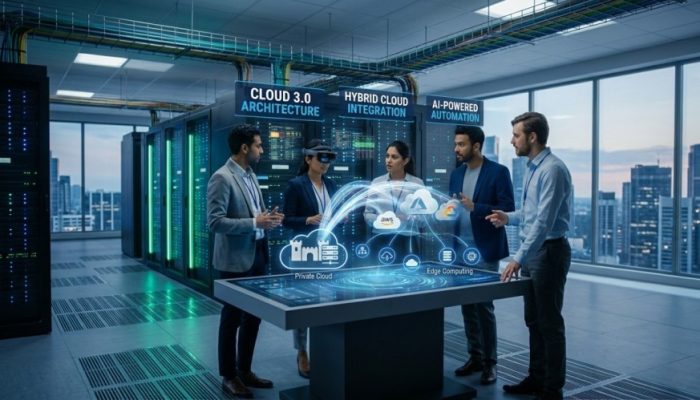

Cloud 3.0 & Hybrid Infrastructure: The Standard for 2026
The digital landscape is undergoing a seismic shift. While Cloud 2.0 was defined by centralization and mobile apps, **Cloud 3.0** is characterized by decentralized processing, Generative AI integration, and the critical need for data sovereignty. For Utah businesses, this isn’t just a futuristic concept—it’s the new standard for enterprise computing. Navigating this evolution requires a strategic blend of public power and private control.
From Storage to Intelligence
Cloud 3.0 moves the conversation from where your data is stored to how it is utilized. It is the intelligent, distributed engine powering the modern AI explosion.
Autonomous Infrastructure
AI is now baked into the hardware layer. Machine learning models monitor traffic patterns to self-heal and auto-scale resources before downtime occurs, a core driver for Microsoft Azure AI solutions.
Decentralized Edge Computing
By processing data closer to the source—IoT devices or smartphones—companies achieve near-zero latency, vital for real-time decision-making in logistics and healthcare.
Data Sovereignty & Security
In a strict regulatory environment, hybrid models allow you to keep sensitive data on private, secure servers while utilizing public cloud tools for high-demand, non-sensitive tasks.
Multi-Cloud Cost Optimization
Cloud 3.0 provides a “sanity check” for IT budgets by moving consistent workloads to fixed-cost private infrastructure and using public bursts only when necessary.
Protecting Your Transition
As traditional “all-in-one” cloud strategies become inefficient due to egress fees and latency, resilience becomes the priority. To maintain business continuity during this shift, a multi-layered approach is essential:
- Redundant Backup: Our Cloud Backup & Disaster Recovery ensures that your intellectual property remains safe across diverse platforms.
- Invisible Infrastructure: Systems that automatically decide the most efficient and secure location for a task to run, whether local or cloud.
- Unified Management: Successfully navigating this web requires the oversight of expert Managed IT Services to ensure optimization and security.
Frequently Asked Questions
What is the primary difference between Cloud 2.0 and 3.0?
Cloud 2.0 focused on centralized storage and accessibility; Cloud 3.0 focuses on decentralized intelligence, AI, and edge processing.
Is hybrid infrastructure a legal requirement?
For heavily regulated industries, knowing exactly where data resides is often a compliance necessity that only a hybrid model can reliably fulfill.
Does Cloud 3.0 help with “Cloud Sprawl” costs?
Yes. By identifying consistent workloads and moving them to fixed-cost private environments, businesses can significantly reduce their total cost of ownership.
Modernize Your Utah Business for the 3.0 Era
The distinction between “local” and “cloud” is blurring. Embracing a hybrid, AI-ready framework is the only way to maintain a competitive edge in 2026. Let Solzorro help you map your journey to an intelligent, secure infrastructure.
→ Start Your Transition TodaySolzorro: Scaling Utah Enterprises into the Future of Cloud.